
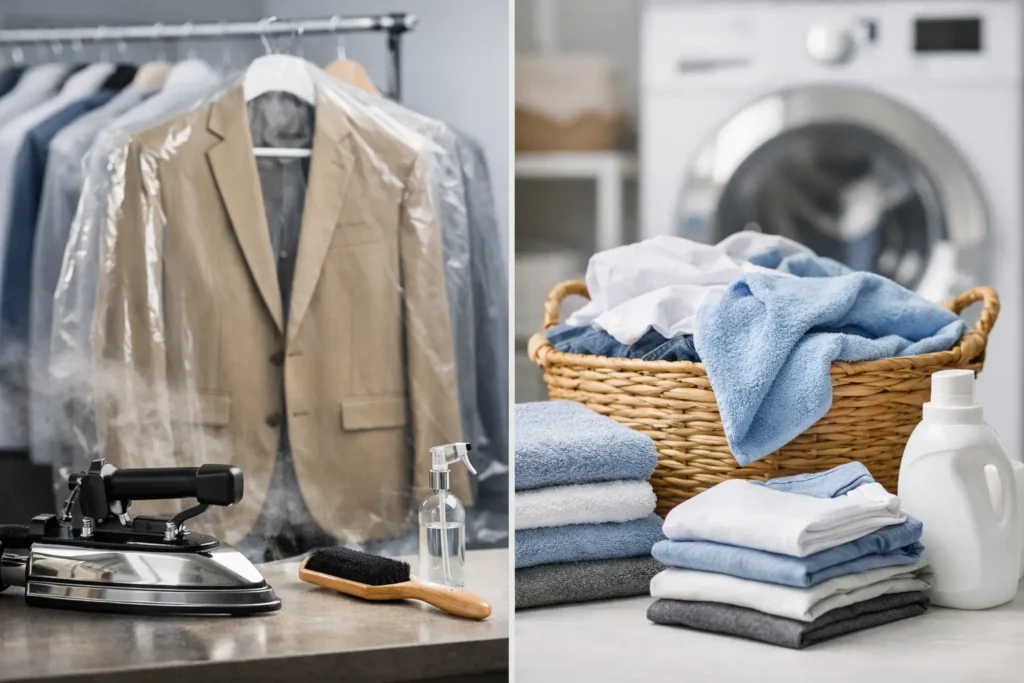
A shirt needed for tomorrow, a suit with a coffee mark, or a duvet that will not fit comfortably in the washing machine – these are the moments when dry cleaning vs laundry becomes more than a simple choice. The right method protects the fabric, removes stains properly and helps clothes keep their shape for longer. The wrong one can leave wool shrunken, colours dull or delicate trims damaged.
For busy households across Farnham and the surrounding area, the most practical answer is often not one service or the other. It is knowing what each is designed to do, then choosing the care that suits the item in front of you.
Dry cleaning vs laundry: the key difference
Laundry uses water, detergent and controlled washing cycles to clean fabrics. It is the familiar choice for everyday washable items such as cotton shirts, towels, bedding, school uniform and most casual clothing. Once washed, items can be dried and pressed where needed.
Dry cleaning uses a specialist cleaning solvent rather than water. Despite the name, garments are not cleaned completely dry. The process is designed for fabrics and constructions that may react badly to water, heat or agitation. A professional cleaner assesses the care label, fabric, lining, trims and stains before choosing the appropriate treatment.
The distinction matters because some garments are made from washable fibres but are still unsuitable for a normal wash. A tailored jacket, for example, may contain interfacing, shoulder padding, linings or bonded sections that can lose their structure when wet. Dry cleaning is often the safer option for protecting its fit and finish.
When dry cleaning is the better choice
Dry cleaning is usually recommended when the care label says “dry clean only”, but the label is not the only consideration. Fabric texture, garment construction and the nature of the stain all play a part.
Suits, blazers, formal dresses, silk blouses, wool coats and pleated garments commonly benefit from professional dry cleaning. The solvent-based process can lift oil-based marks, cosmetics, grease and some food stains without saturating the fibres in water. It also helps preserve crisp tailoring and more delicate finishes.
It is particularly useful for occasionwear. A wedding guest dress may have beading, lace, fine pleats or a delicate lining. A dinner suit can look clean at first glance but carry marks around the collar, cuffs or lapels. Cleaning these pieces professionally before storing them helps prevent stains from settling and becoming harder to remove later.
Winter outerwear needs similar care. Premium coats and jackets can include down filling, technical membranes, faux fur trims, leather details or waterproof coatings. These items should be treated according to their individual materials rather than put through a standard wash cycle on guesswork.
When laundry is the sensible option
Laundry is ideal for the clothing and household textiles that work hard every day. Cotton and cotton-blend shirts, T-shirts, trousers, underwear, towels, bedding and washable workwear are generally designed to be cleaned with water.
A professional laundry service does more than save time. It allows washing temperatures, detergents and drying methods to be chosen for the load, rather than treating everything as if it were the same. Whites, colours and delicate fabrics should not always be handled together, particularly where colour transfer or shrinkage is a risk.
Shirts are a good example. Most can be laundered safely, then professionally pressed for a clean, sharp finish. This is often more suitable and more economical than dry cleaning them, especially for regular office wear. The same applies to wash-and-fold laundry for families dealing with a constant flow of everyday clothes.
For bulky items, professional laundry can also be the practical answer. Duvets, bedspreads, mattress protectors and large throws need enough space to wash and dry evenly. Overfilling a domestic machine can reduce cleaning performance and may leave heavy items damp in the middle.
A quick comparison of dry cleaning and laundry
| Consideration | Dry cleaning | Laundry | |—|—|—| | Cleaning method | Specialist solvent treatment | Water and detergent | | Best for | Suits, silk, wool, formalwear and structured garments | Shirts, bedding, towels, cottons and everyday clothing | | Useful on | Oil, grease, make-up and stains on delicate fabrics | Sweat, everyday dirt and water-based marks | | Main benefit | Protects shape, texture and delicate detailing | Thorough, practical care for washable items | | Pressing | Often included or recommended for a polished finish | Ideal for shirts, linens and everyday garments |
This comparison is helpful, but it is not a substitute for checking the care label. “Machine washable” does not always mean a garment can cope with high heat, a fast spin or tumble drying. Equally, “dry clean” may indicate a recommended method rather than the only possible one. When an item is valuable, sentimental or difficult to replace, professional assessment is the safest route.
How to choose the right service for each item
Start with the care label, then consider how the garment is made and what needs removing. If it has a structured shape, delicate embellishment, leather trim, fine wool, silk or a stubborn oily stain, dry cleaning is likely to be the better choice. If it is an everyday washable fabric with normal wear and washing needs, laundry is usually appropriate.
The condition of the item matters too. A cotton shirt with a fresh food mark may respond well to laundry treatment. A silk shirt with perfume, make-up or an old stain needs more caution. Rubbing or soaking it at home can spread the mark, weaken the fabric or leave a water ring.
Fresh stains need the right response
Do not leave stains sitting in a laundry basket until the weekend if you can avoid it. The longer tea, wine, oil, deodorant or make-up remains on a fabric, the more likely it is to set.
Blot rather than rub, and avoid applying random household products to delicate garments. Heat can make some stains permanent, so do not iron or tumble dry an item until the stain has been properly treated. Tell your cleaner what caused the mark and when it happened. That small detail can help determine the best cleaning process.
Pressing is not the same as cleaning
A garment can be freshly cleaned but still look tired if it is creased or poorly finished. Professional pressing restores a neat appearance to shirts, trousers, dresses and formalwear, while paying attention to collars, cuffs, seams and pleats.
This is especially useful for professionals who want workwear ready for the week, families preparing for an event, or anyone who would rather not spend Sunday evening at the ironing board. Clean, well-pressed clothes also tend to feel easier to wear and maintain.
Why professional care can save money over time
Home washing has its place, but mistakes are costly. Shrinkage, dye transfer, misshapen knitwear and damaged trims can turn a perfectly good garment into something you no longer wear. Replacing a favourite coat or tailored suit is often far more expensive than choosing the correct cleaning method from the start.
Professional care is also valuable for items that are awkward to manage at home. Curtains collect dust and odours but can be difficult to remove, wash, dry and rehang. Wedding dresses need careful inspection before treatment and storage. Specialist outerwear may require methods that preserve insulation and surface performance.
At Farnham Dry Cleaners, everyday laundry and specialist garment care can be arranged around your schedule, with collection and delivery available to reduce the time spent on essential household tasks. Whether you need a same-day option for urgent clothing or careful treatment for a special item, clear communication about the fabric and stain helps achieve the best result.
The easiest rule is this: wash the items built for everyday water-based cleaning, and choose dry cleaning when fabric, construction or value calls for extra care. If you are unsure, set the garment aside rather than risking a home wash – a quick professional check can protect the clothes you rely on most.