
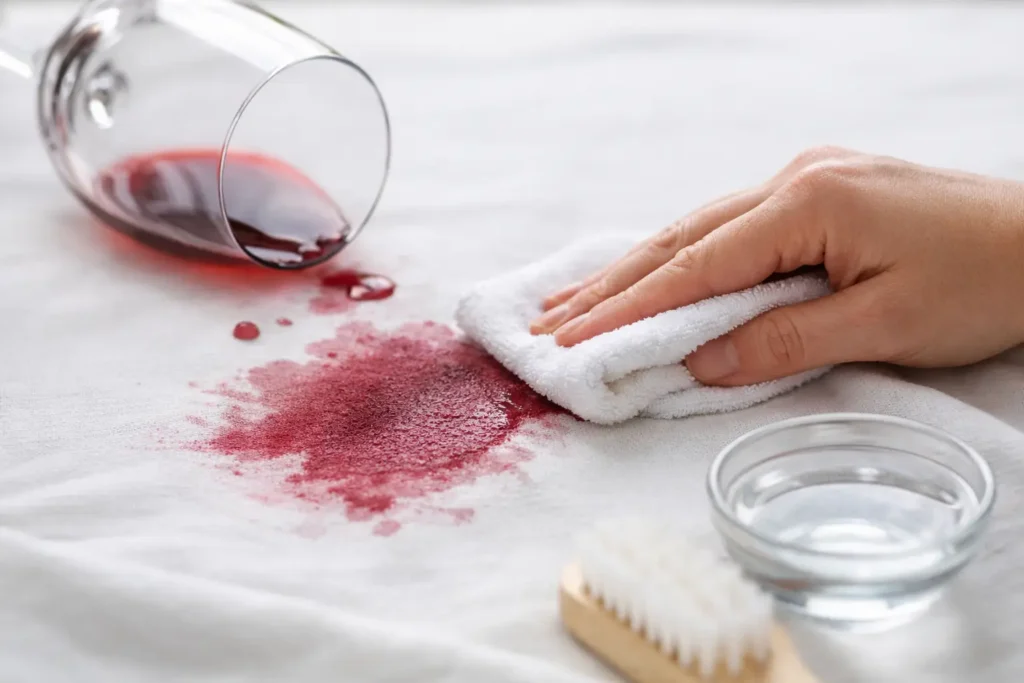
A glass tips during dinner, a guest catches a sleeve on the table, or a red wine splash lands on the sofa just before visitors arrive. Knowing how to remove wine stains quickly can make the difference between a short clean-up and a permanent mark. The priority is simple: act calmly, keep the stain wet, and avoid treatments that can set the colour deeper into the fibres.
Red wine contains strong natural dyes called tannins. They spread quickly through absorbent materials, particularly cotton, linen, wool and pale upholstery. There is no single method that suits every fabric, so check the care label before applying anything beyond water and gentle blotting.
First: contain the spill without rubbing
Start by lifting excess wine straight away. Place a clean white cloth, kitchen towel or plain paper towel over the spill and press gently. Work from the outer edge towards the middle so the stain does not spread. Keep changing to a clean area of cloth as it absorbs the wine.
Do not rub. Rubbing pushes pigment further into the fabric and can roughen delicate fibres, leaving a faded or distorted patch even if the wine itself comes out. Avoid heat as well. A radiator, tumble dryer, iron or hairdryer can fix the stain in place before it has been properly treated.
If you are out at a restaurant or event, blot with a clean napkin and dab carefully with a little cold water if available. That is enough for the moment. Aggressive emergency fixes are often harder for a cleaner to reverse than the original spill.
How to remove wine stains from washable clothes
For washable cotton, polyester and many colourfast blends, rinse the reverse side of the stain under cold running water. Running water from behind helps push the wine back out rather than through the garment. Do this for a few minutes where possible, without stretching the material.
Next, apply a small amount of liquid laundry detergent directly to the damp stain. Gently work it in with your fingertips, then leave it for around 10 to 15 minutes. Rinse with cold water and inspect the area in good light. If the mark has lightened but remains visible, repeat the process once before washing.
Wash the garment according to its care label, using the coolest suitable setting. Do not put it in the tumble dryer until you are certain the stain has gone. A faint pink or grey shadow can become much more difficult to remove after drying.
For white, washable fabrics, an oxygen-based laundry stain remover may help with a stubborn red wine mark. Follow the product instructions carefully and test it on a hidden area first. Chlorine bleach is not a general answer: it can weaken fibres, yellow some whites and damage coloured stitching, trims or prints.
Silk, wool, cashmere, viscose, velvet and garments marked dry clean only need a different approach. Blot them, place a clean cloth behind the affected area if practical, and leave further treatment to a professional. Home detergents, stain sprays and vigorous rinsing can cause colour loss, water rings or shrinkage on these fabrics.
Removing red wine from carpet
Carpet needs fast attention because wine can soak through the pile and into the backing. After blotting up as much as possible, use a clean white cloth lightly dampened with cold water to dab the stained area. Blot again with a dry cloth. Repeat this alternating process until little or no colour transfers onto the cloth.
If a mark remains, use a carpet stain treatment that is suitable for your carpet type and follow its directions precisely. Test it in an inconspicuous spot first, especially on wool, patterned or richly coloured carpets. Over-wetting is a common mistake: it can spread the stain, affect the backing and leave a damp smell.
Do not scrub with a brush or pour cleaning solution directly onto the carpet. Apply any product to a cloth first, then dab. Once the stain is lifted, blot dry and allow the area to air dry naturally. Walking over it while damp can flatten the pile and transfer remaining colour.
Treating wine stains on sofas and upholstery
Upholstery is less forgiving because the filling beneath the surface can hold moisture and dyes. Blot the spill immediately with a white absorbent cloth, then check the manufacturer’s cleaning code if it is still attached to the sofa or cushion. These codes indicate whether water-based, solvent-based or professional cleaning is appropriate.
For fabric upholstery that permits water-based cleaning, use minimal cold water and gentle blotting. Keep the treated area small and avoid soaking through to the cushion filling. On velvet, silk, suede, leather or antique upholstery, stop after blotting and arrange specialist cleaning. These materials can develop rings, texture changes or permanent colour variation from the wrong product.
If cushion covers are removable, do not assume they are machine washable. Check each label, as the cover and inner cushion may have different care requirements. A cover that shrinks even slightly may no longer fit neatly over the cushion.
Common wine-stain fixes to avoid
Salt is often suggested as a quick fix, but it is not a reliable stain remover. It may absorb some surface moisture, yet it can leave residue in fabric or carpet and does not remove the tannins properly. The same caution applies to white wine: pouring more wine onto a stain may dilute it briefly, but it still adds liquid and sugar to the area.
Be careful with bicarbonate of soda, washing-up liquid and hydrogen peroxide mixtures found online. They can be useful in very specific situations, but they are not suitable for every textile. Strong DIY mixtures may bleach colour, leave a tide mark or alter the finish of delicate fabrics.
Avoid these four mistakes in particular:
- rubbing or scrubbing the spill;
- using hot water or heat before the stain has lifted;
- applying coloured cloths, which may transfer dye; and
- drying the item before checking that all traces of wine have gone.
A clean white cloth is always the safer choice. It lets you see whether wine is still lifting and prevents accidental colour transfer during treatment.
When to take a wine-stained garment to a dry cleaner
Professional treatment is the sensible option for dry-clean-only clothing, tailored suits, formal dresses, wedding outfits, coats, silk blouses and anything with embellishments. It is also worthwhile when the item is expensive, sentimental or needed soon. The earlier the garment is treated, the better the chance of complete removal.
Tell the cleaner what was spilled, when it happened and which home treatments you have already used. That information helps them choose the right spotting method and avoid reactions between cleaning products. Do not leave a damp stained item in a sealed bag for days, as moisture can encourage odours and make the area harder to assess.
At Farnham Dry Cleaners, specialist garment care can take the uncertainty out of treating delicate or high-value pieces. A quick professional assessment is often better value than risking permanent damage to a favourite outfit.
What if the stain has already dried?
A dried wine stain is harder, but not always permanent. On washable garments, soak the affected area in cold water first to soften the residue, then apply liquid detergent and wash as the label allows. You may need to repeat this more than once. Patience is safer than moving straight to harsh chemicals.
For carpets and upholstery, dried marks need more care because the original spill may have reached deeper layers. Lightly dampen and blot rather than saturating the area. If the stain is old, large or on a natural-fibre surface, professional cleaning is usually the safest route.
The best response to a wine spill is quick, gentle action: blot, use cold water where the fabric allows, and keep heat well away. When the item matters, protect it first and let expert care handle the stain.