
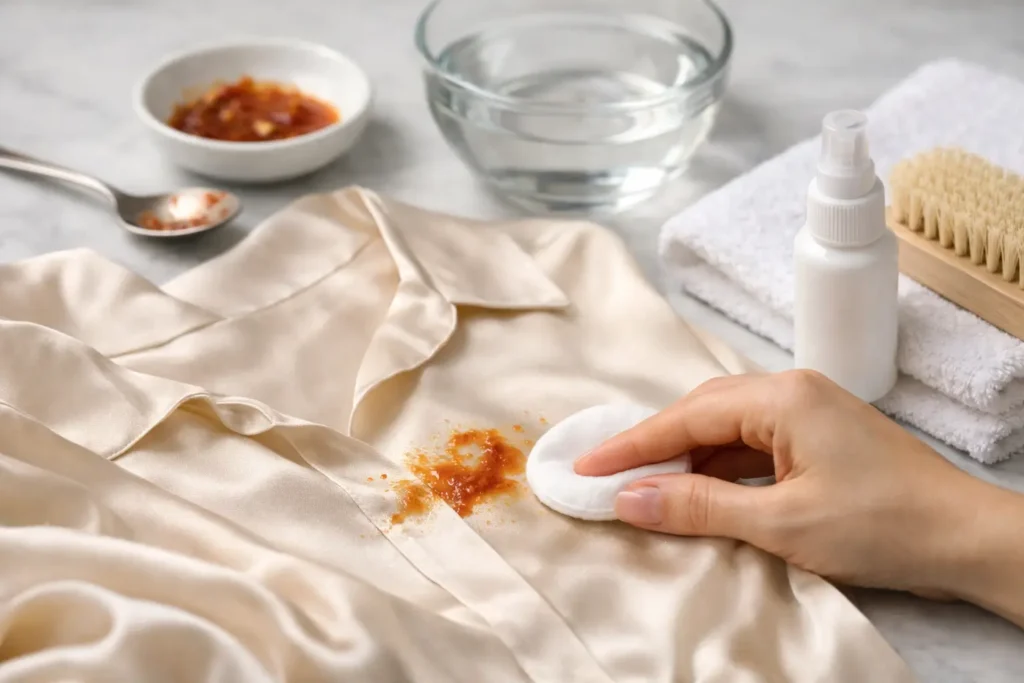
A splash of pasta sauce on a silk blouse or a drip of dressing on a tie can feel like a disaster, particularly when you are about to leave for work or an event. The good news is that it is often possible to remove food stains from silk, but the first few minutes matter. Silk fibres are fine, absorbent and easily marked by heat, rubbing and the wrong cleaning product, so a gentle response is far safer than an enthusiastic one.
Act quickly, but do less
The priority is to stop the stain spreading and prevent it setting. Place the garment flat on a clean white towel, with the stained area facing up. Use a dry white cloth or plain kitchen roll to blot the food away. Press lightly and lift straight off. Do not rub in circles, scrub with a nail brush or use coloured napkins, as friction can roughen the silk and colour can transfer onto it.
If there is solid food on the fabric, such as chocolate, curry, jam or cream, carefully lift it away with the edge of a spoon. Work from the outside of the stain towards the middle. This helps keep the mark contained rather than pushing it into a larger area.
Avoid heat at this stage. A radiator, hairdryer, hot water and an iron can all set proteins, sugars and oils into the fibres. Even if the stain looks lighter once it dries, it may be much harder to treat later.
Check the care label before using water
Not all silk garments should be treated in the same way. A plain, washable silk shirt may tolerate a controlled hand-cleaning test, while a silk dress with lining, beadwork, pleats, deep colours or a structured shape is better left untouched after blotting. If the label says dry clean only, follow it. The label is not a suggestion, particularly on expensive occasionwear.
Be extra cautious with vintage silk, satin, crepe, silk velvet, hand-painted pieces and garments with contrasting panels. Water can leave a tide mark, affect the finish or cause dyes to run. The risk is higher when the silk is dark, brightly coloured or printed.
If you are unsure whether the item is washable, do not test a cleaning method on the visible stain. Protect the garment by blotting it dry and arranging professional care as soon as practical.
How to remove food stains from washable silk
Only try the following method if the care label permits gentle hand washing and the stain is small. You will need cool water, a clean white cloth and a tiny amount of mild detergent designed for delicate fabrics. Strong laundry liquid, washing-up liquid, stain sprays and biological products are too aggressive for this job.
First, test the diluted detergent on an unseen seam allowance. Dab it on with a cotton bud, wait a few minutes, then blot with a damp cloth. If colour comes away or the area changes in appearance, stop immediately.
For a successful test, mix a very small amount of delicate detergent into cool water. Dampen a white cloth rather than soaking the garment. Place a dry towel behind the stain, then gently dab the solution onto the mark from its edge towards the centre. Keep the affected area as small as possible.
Use another cloth lightly dampened with clean cool water to remove detergent residue. Finally, press the area between clean dry towels. Do not twist, wring or hang the garment while it is dripping wet. Lay it flat, reshape it gently and allow it to air dry away from direct sunlight and heat.
This approach works best on fresh, light food marks. It is not a guarantee, and repeated home treatment can create a larger water ring or fade the fabric. If the stain remains visible after one careful attempt, stop rather than escalating to stronger products.
For oily food stains
Butter, olive oil, mayonnaise, gravy and salad dressing need a slightly different response. Blot away any excess oil first, without pressing hard. You can then sprinkle a small amount of cornflour onto the affected area to absorb surface oil. Leave it for around 20 to 30 minutes, then lift it away gently with a soft brush or by carefully shaking the garment.
Do not rub the powder into the silk. Oily stains often look as though they have disappeared before leaving a darker patch once the fabric dries. A professional cleaner can treat the oil without turning a small mark into a visible water stain.
For sauce, fruit and drink spills
Tomato sauce, berries, red wine, coffee and curry can contain strong pigments as well as oils or sugars. Blot immediately, then use only cool water if the care label allows it. Do not reach for salt, lemon juice, white vinegar or bicarbonate of soda. These popular household fixes can alter silk’s colour and texture, and acidic products may make dye loss more obvious.
Red wine is especially tempting to treat at home, but silk does not respond like a tablecloth. Keep the garment dry after blotting and take it for specialist cleaning promptly. Mention what caused the stain and whether anything has already been applied.
For chocolate, dairy and egg-based food
Chocolate, cream, yoghurt, custard and egg can leave a combination of fat and protein. Heat is the main problem here, as it can set the protein into the fibres. Lift away solids with a spoon, blot with a dry cloth and avoid warm water altogether.
A washable silk item may be suitable for the mild, cool-water method above. For dry-clean-only silk, especially a dress or tie, leave the remaining mark for professional treatment. Trying several stain removers can lock the stain in and make the cleaner’s work more difficult.
Common mistakes that damage silk
Silk rarely benefits from force. The most common issue we see is not the original spill, but the mark left by an attempted rescue. Never use bleach, oxygen bleach, enzyme stain removers or a standard pre-wash spray on silk unless the product specifically states it is suitable and you have tested it safely.
Machine washing is also a poor response to one food stain. The agitation can distort the garment, while a stain may spread through the wash water. Likewise, do not put silk in a tumble dryer to see whether the mark has gone. Heat can make an invisible residue permanent.
Steam and ironing should wait until the stain has been completely removed. If pressing is necessary after cleaning, use the lowest silk setting, place a clean pressing cloth between the iron and the garment, and avoid pressing directly over any area that may still contain residue.
When professional cleaning is the sensible option
Professional care is the safest choice for dry-clean-only silk, tailored or lined garments, wedding guest outfits, scarves, ties, designer pieces and anything with a large, old or deeply coloured stain. It is also the right call when the spill has happened on a garment you cannot afford to replace.
Tell the cleaner what the food was, when it happened and what you used on it. Those details help select the treatment and prevent incompatible solvents being used. Do not store the item in a plastic bag or leave it in a hot car while you decide what to do. Keep it dry, loosely protected and out of sunlight.
For busy households across Farnham and the surrounding area, Farnham Dry Cleaners can assess delicate silk garments and arrange expert care without adding another trip to your day. Fast action gives the best chance of a spotless result, but careful handling gives silk the best chance of staying beautiful for years to come.