
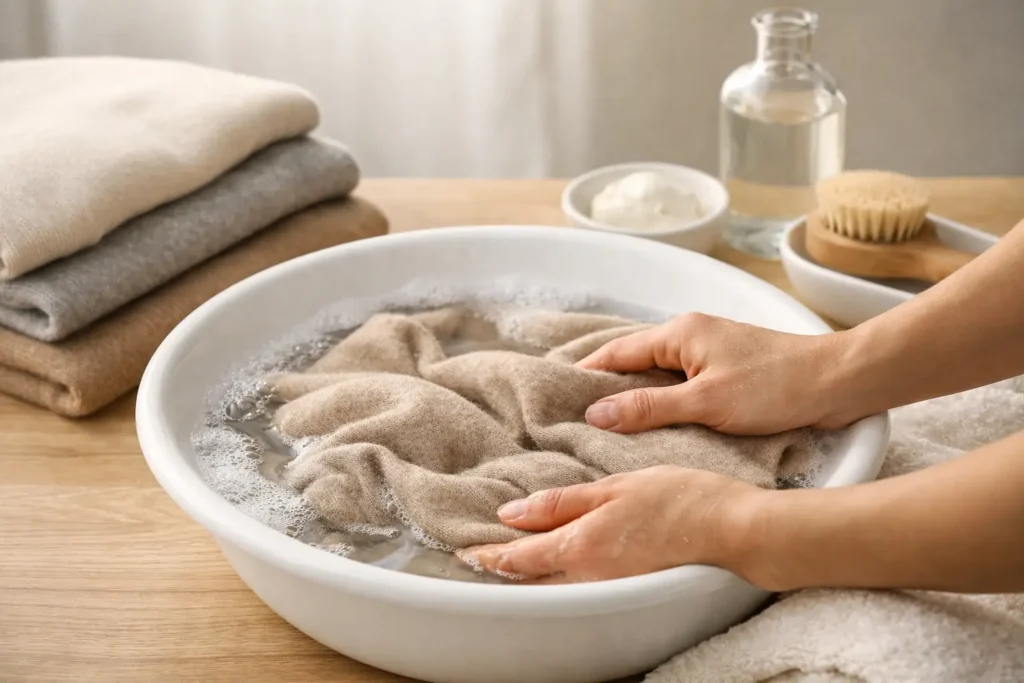
A cashmere jumper can look perfectly fine after a wash, then shrink, felt or lose its shape while drying. That is why cleaning cashmere without damage is less about washing often and more about using the right method at the right time. A little patience protects the softness, fit and finish that make cashmere worth owning.
Cleaning cashmere without damage starts with the care label
Before doing anything, read the garment’s care label. Some cashmere pieces are suitable for careful hand washing, while others are marked dry clean only because of their construction, dyes, lining or embellishments. A lightweight knitted jumper may tolerate a gentle wash at home; a tailored cashmere coat, structured cardigan or item with leather trim is better left to a specialist.
The label is the maker’s advice for that particular garment, not a general rule for all woollens. If it says dry clean only, do not treat that as a suggestion. The cost of professional care is usually far less than replacing a favourite cashmere piece that has shrunk or distorted.
Cashmere does not need washing after every wear. Unless it is stained or has picked up odour, airing it flat in a clean, dry room for a few hours is often enough. Wearing a light layer underneath can also reduce how frequently a jumper needs cleaning.
When hand washing is the safest option
If the label permits washing, hand washing is generally the most controlled approach. Use a clean basin or sink and fill it with cool water. Hot water can cause the fibres to contract and felt, while changing temperatures during the wash can be just as troublesome.
Add a small amount of detergent made for wool, cashmere or delicate fabrics. Ordinary biological detergent, bleach and fabric softener are poor choices: they can strip the natural softness from the fibres or leave a coating that changes the feel of the knit.
Turn the garment inside out before placing it in the water. Gently press it beneath the surface and let it soak for around five to ten minutes. Move it slowly through the water with your hands, concentrating only on areas that need attention, such as the cuffs, neckline and underarms. Do not scrub, twist or rub the fabric against itself. Friction is what turns soft cashmere into a matted, smaller version of itself.
Drain the basin, then refill it with cool water at a similar temperature. Press the water through the garment until the detergent has gone. You may need to repeat this once or twice, but avoid holding it under a running tap, which can stretch the knit with its weight.
Can cashmere go in the washing machine?
It depends on both the label and the machine. Some modern machines have a genuine wool or hand-wash setting, but a hand wash gives you more control and removes the risk of an overly energetic spin. If you choose a machine, place the garment inside a mesh laundry bag, use a wool detergent, select a cold wool cycle and choose the lowest available spin.
Never put cashmere in with towels, jeans, items with zips or anything likely to create friction. Even on a delicate cycle, one rough companion can cause pilling or snagging. Machine washing can be reasonable for a sturdy, label-approved everyday knit, but it is not the best choice for fine gauge, older or particularly valuable cashmere.
Drying cashmere without stretching it
Most damage happens after washing. A wet cashmere garment is heavy, and hanging it over a hanger or clothes airer can pull the shoulders, sleeves and body out of shape. A tumble dryer is even riskier, as heat and tumbling can shrink the fibres quickly.
Instead, lift the garment from the basin with both hands supporting its full weight. Do not wring it out. Lay it flat on a clean, absorbent towel, gently arrange it to its original shape, then roll the towel and garment together like a Swiss roll. Press lightly to transfer excess water into the towel.
Unroll it and place the cashmere flat on a second dry towel or a mesh drying rack. Smooth the seams, straighten the sleeves and check the length before leaving it to dry. This is the moment to reshape it, not once it has dried. Keep it away from radiators, direct sunlight and strong heat, which can make the yarn brittle or cause uneven fading.
Drying may take a day, particularly in cooler weather. Turn the garment over once the upper side feels dry so that both sides can finish evenly. It is slower than a tumble dryer, but it preserves the fit you paid for.
Treating stains without making them worse
The first rule with a fresh stain is to blot, never rub. Use a clean white cloth or kitchen paper to lift away excess liquid. Rubbing drives the stain deeper into the fibres and can roughen the surface of the knit.
For a small, water-based mark, such as tea or a light food spill, dab the area with cool water and a tiny drop of wool detergent. Work from the outside of the stain towards the centre, using very little moisture. Then rinse the treated section carefully and dry the garment flat.
Oil, make-up, red wine, ink and old stains need more caution. Home stain removers can bleach colour or leave a visible ring, especially on pale or richly dyed cashmere. Do not use washing-up liquid, vinegar, bicarbonate of soda or stain sticks unless the care label specifically supports the treatment. Popular online remedies can be far harsher than they sound.
For a significant mark, place the garment aside and arrange specialist cleaning as soon as possible. Let the cleaner know what caused the stain and whether you have already tried any treatment. That information helps them select a safer process.
Pilling, pressing and everyday care
Pilling is normal with cashmere, particularly where the fabric rubs against a coat, handbag strap or desk edge. It does not necessarily mean the garment is poor quality. Remove pills carefully with a cashmere comb or fabric shaver designed for knitwear, using a light touch on a flat surface. Do not pull loose fibres by hand, as this can create a larger snag.
If your cashmere is creased, avoid pressing it directly with a hot iron. Use a steamer from a short distance, or place a damp pressing cloth between the iron and the garment on a low wool setting. Test an inconspicuous area first. Too much heat can flatten the natural loft of the yarn and leave a shine.
Store clean, fully dry cashmere folded rather than hung. Hangers stretch shoulders over time, particularly with heavier knits. During warmer months, keep pieces in a breathable storage bag or drawer with moth protection suitable for clothing. Moths are drawn to natural fibres, especially garments that have been worn but not cleaned.
When professional cashmere cleaning makes sense
Professional care is the sensible choice when the label says dry clean only, when a stain is difficult, or when the item is structured, lined, embellished or especially valuable. It is also useful after a season of regular wear, when body oils and invisible soil can build up around collars and cuffs.
A specialist cleaner can assess the fibre, dye stability and construction before choosing the treatment. That matters with cashmere coats, designer knitwear, occasion pieces and garments that have already been affected by a home-washing mishap. Speed also helps with stains: the longer a mark remains in the fibres, the harder it may be to remove safely.
For busy households in Farnham and nearby Surrey areas, Farnham Dry Cleaners can take the inconvenience out of specialist garment care with collection and delivery options. The aim is simple: your cashmere comes back clean, soft and ready to wear, without asking you to gamble on a rushed wash at home.
Treat cashmere as a fabric that benefits from less effort, not more. Wash only when needed, keep water cool, dry it flat and call in expert care when the label or stain leaves room for doubt. Those small decisions can keep a well-loved knit looking good for many winters.