
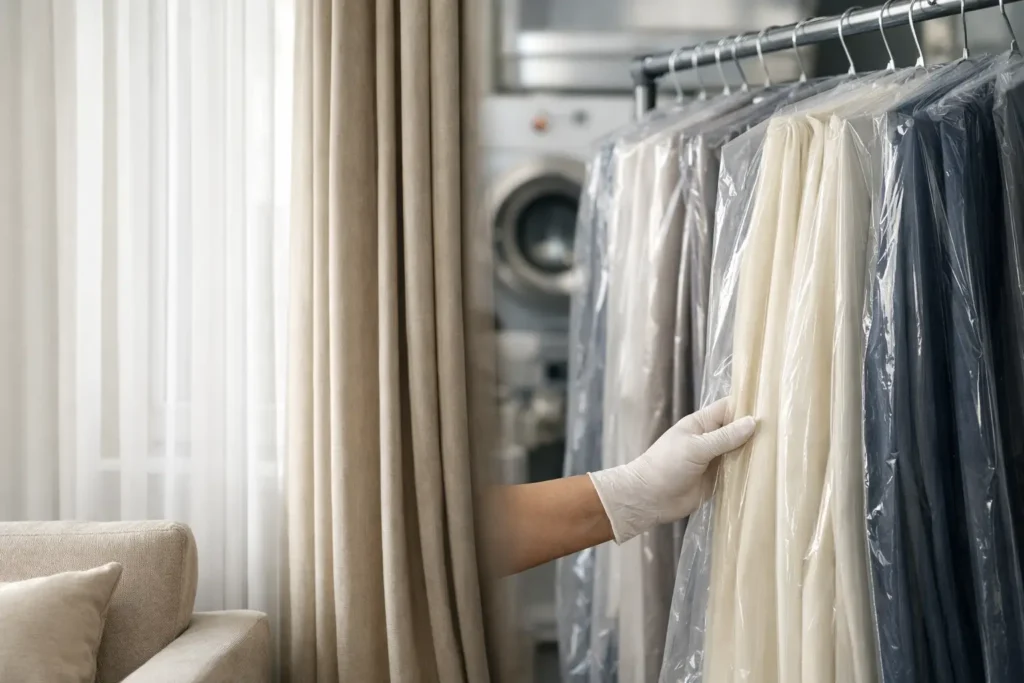
Curtains are one of those household items people leave in place for years, right up until dust, cooking odours or sun marks make them impossible to ignore. If you are wondering can curtains be dry cleaned, the short answer is yes, many can – and in some cases they absolutely should be – but the right method depends on the fabric, the lining, the construction and the condition of the curtains.
That matters more than most people realise. A pair of curtains can look sturdy enough for a normal wash, then come back puckered, faded or noticeably shorter. Once shrinkage or distortion happens, it is very difficult to put right. For lined, pleated or made-to-measure curtains in particular, careful professional cleaning is usually the safer route.
Can curtains be dry cleaned safely?
Yes, curtains can often be dry cleaned safely, especially when they are made from delicate fibres or have structured linings and headings. Dry cleaning is designed to clean fabrics without fully soaking them in water, which reduces the risk of shrinkage, dye bleed and misshaping.
This is often the best option for wool, silk, velvet, interlined curtains and many lined drapes. It is also commonly recommended for curtains with pinch pleats, blackout linings or stitched finishes that can lose their shape in a standard wash.
That said, not every curtain needs dry cleaning. Some modern polyester curtains are machine washable, and some cotton or mixed-fibre styles can be wet cleaned professionally with good results. The label is the first place to look, but labels are not the whole story. Age, sun exposure and previous cleaning history also affect what is safe.
When dry cleaning is the best choice
Dry cleaning tends to be the safest option when the curtains are expensive, delicate or difficult to replace. If they were made to measure, have a heavy lining, or hang in a large bay window, there is usually more at stake than with a lightweight ready-made pair.
Fabric type is a major factor. Natural fibres can react badly to water if they are not handled carefully. Silk may watermark, wool can shrink, and velvet can lose its pile or texture. Linings can also behave differently from the face fabric, which is where problems start. One layer stays stable, the other tightens or relaxes, and the curtain no longer hangs properly.
Dry cleaning is also worth considering if your curtains are dusty but otherwise in good condition. Professional treatment can remove built-up soil and odours while preserving the drape and finish. In homes with pets, smokers, open fires or busy kitchens, that can make a noticeable difference.
When curtains should not be dry cleaned
There are cases where dry cleaning is not the right method. Some coatings, bonded backings or acrylic finishes can react poorly to cleaning solvents. Certain blackout linings, particularly older ones, may become brittle, crack or separate with age regardless of how they are cleaned.
Very old curtains can be fragile simply because the fabric has weakened over time. Sunlight is often the hidden issue here. Curtains may look fine from the room side, but the fibres near the window edge can be degraded. Any cleaning process, including dry cleaning, can expose that weakness.
This is why inspection matters. A proper cleaner will look at the label, the fabric, the lining and any signs of sun damage before deciding on the method. If there is a risk, you should be told up front rather than promised a result that is not realistic.
Can lined curtains be dry cleaned?
Can lined curtains be dry cleaned? In many cases, yes, and lined curtains are often better suited to dry cleaning than home washing. The extra layer adds weight and structure, but it also adds complexity. If the outer fabric and the lining respond differently to water, twisting, puckering and shrinkage can follow.
Dry cleaning helps limit those risks, especially for pleated curtains and blackout-lined styles. It is not a magic fix for every fabric, though. If the lining is old, perished or already separating, cleaning may reveal damage that was already there.
For householders, this is usually the point where professional handling makes most sense. Taking down large lined curtains, cleaning them properly and rehanging them without creasing is a job most people would rather avoid.
What about machine washing at home?
Some curtains can be washed at home, but this is where people get caught out. A care label saying washable does not always mean a standard full wash in a domestic machine is risk-free. Home machines can be too small for bulky curtains, which means poor rinsing, creasing and strain on the seams.
Even if the fabric survives the wash, drying is another issue. Heavy curtains hold a lot of water, and uneven drying can distort the shape. If they shrink even slightly, the change will show once they are rehung.
For simple, unlined polyester curtains, home washing may be fine if the label allows it. For anything lined, pleated, delicate or custom-made, caution is sensible. Saving money on cleaning is not much of a saving if the curtains no longer fit the window.
Common problems people want curtain cleaning to fix
Most curtain cleaning requests come down to a handful of issues. Dust is the obvious one, but smells are just as common. Curtains absorb cooking odours, pet smells, smoke and general household air over time. They can also dull in appearance when fine dirt builds up in the fibres.
Cleaning can improve freshness, remove surface soiling and restore a cleaner look, but it is worth being realistic. Strong sun fading will not wash out. Fabric that has yellowed from age may improve but not return to new. Mould spotting, water marks and long-set stains can sometimes be reduced rather than fully removed.
A dependable cleaner should explain that clearly. Good care is not just about cleaning the item. It is also about protecting the fabric and setting honest expectations.
How professional curtain cleaning usually works
A proper curtain cleaning service starts with inspection. The cleaner checks the care label, fabric composition, lining type, stain areas and any signs of wear. That helps determine whether dry cleaning, wet cleaning or another method is most suitable.
The curtains are then cleaned using the chosen process, with attention to minimising shrinkage and preserving shape. After cleaning, they are finished carefully so they are returned looking presentable and ready to hang. For busy households, collection and delivery can make a big difference, especially with large or awkward sets.
This is one reason specialist curtain cleaning is popular. It removes the practical hassle as well as the cleaning risk. Farnham Dry Cleaners, for example, sees plenty of customers who are less worried about the theory of cleaning and more interested in getting the job done properly without losing half a day to it.
How often should curtains be cleaned?
For most homes, every 12 to 24 months is a sensible guide. In bedrooms or less-used rooms, they may need attention less often. In kitchens, homes with pets, smoking households or properties on busy roads, more frequent cleaning may be worth it.
Regular vacuuming with a soft brush attachment can help between professional cleans. That will not replace a proper clean, but it does slow down the build-up of dust and grit that can make fabrics look tired.
If you notice odours, visible dust, dullness or allergy symptoms that seem worse near soft furnishings, it is probably time.
Questions to ask before booking
Before handing over your curtains, ask what cleaning method is being recommended and why. It is also sensible to ask whether the cleaner has experience with lined curtains, blackout linings, interlined curtains or delicate fabrics if that applies to your home.
You should also ask about collection, turnaround time and whether any risks have been identified before cleaning starts. Clear answers are a good sign. Curtain cleaning is not just a matter of putting fabric through a process. It is about choosing the least risky method for that specific item.
The best answer to can curtains be dry cleaned is not a blanket yes or no. It is yes, often, and sometimes it is the safest choice by far. If your curtains are lined, delicate, made to measure or simply too important to gamble with, professional advice is worth having before they go anywhere near a washing machine. A careful clean can freshen a whole room, and getting it right first time is usually the easiest option of all.