
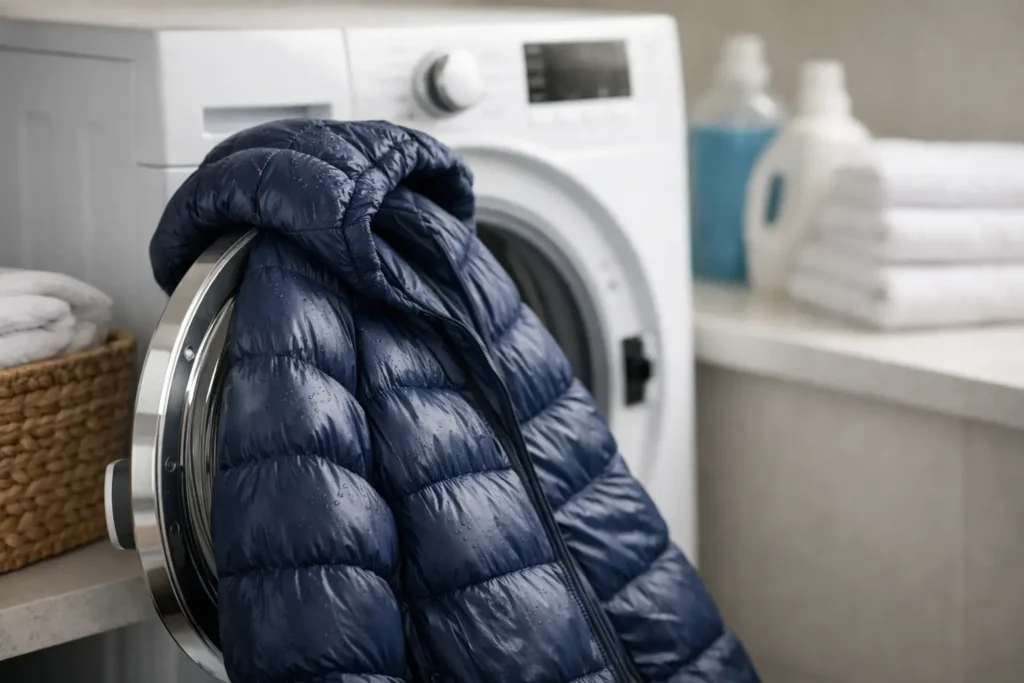
That flat, clumpy look after washing is usually what puts people off. A puffer jacket can come out of the machine looking far worse than it went in, even when it was only lightly soiled. If you are wondering how to clean a puffer jacket without ruining the loft, shape or finish, the good news is that it can be done safely – as long as you treat the fabric, filling and drying stage properly.
Puffer jackets are built differently from standard coats. The outer shell is often lightweight and tightly woven, the stitching creates separate baffles, and the insulation inside may be natural down or synthetic fill. Each part reacts differently to water, heat and agitation. That is why the label matters, and why a quick wash on the wrong setting can leave you with a jacket that looks clean but no longer performs as it should.
Before you clean a puffer jacket
Start with the care label. Some puffers are machine washable, some need specialist handling, and some trims can change the rules completely. Faux fur, leather details, taped seams and delicate finishes all need extra care. If the label says dry clean only, it is best not to test your luck at home.
Next, check what actually needs cleaning. If there is a small mark on the cuff or collar, a full wash may be unnecessary. Overwashing shortens the life of technical outerwear, especially if the shell has a water-repellent treatment. In many cases, spot cleaning is enough to freshen up the jacket and keep wear to a minimum.
Before washing, empty the pockets, fasten the zip, close poppers and Velcro, and turn the jacket inside out if the label allows. This helps reduce friction on the outer fabric and protects the finish. If there are obvious stains, treat them first with a mild detergent and a soft cloth rather than using anything harsh.
How to clean a puffer jacket at home
If the care label confirms machine washing is safe, use a gentle cycle at a low temperature, usually 30°C. A liquid detergent is normally the better choice because powders can leave residue inside the filling. Go easy on the amount. More detergent does not mean a better result, and leftover soap is one of the main reasons puffers dry stiff or patchy.
Do not use fabric conditioner. It can coat the fibres and reduce the jacket’s ability to trap air, which is exactly what gives it warmth. Bleach is also off the table, even for pale colours, because it can weaken the fabric and affect the finish.
A drum with enough room for the jacket to move freely is important. If you force a bulky coat into a small machine, the wash is less effective and the filling can become uneven. For larger winter jackets, it often makes more sense to use a professional service with the right capacity and handling.
If hand washing is recommended, fill a clean basin or bath with lukewarm water and a small amount of mild liquid detergent. Gently press the jacket through the water rather than scrubbing or wringing it. The goal is to lift dirt without disturbing the insulation more than necessary. Rinse thoroughly until the water runs clear.
Spot cleaning between washes
For light everyday grime, spot cleaning is often the most practical option. Collars, cuffs, pocket edges and the front placket usually pick up the most dirt from skin contact and daily wear. A soft cloth, lukewarm water and a small amount of gentle detergent will usually deal with these areas well.
Blot rather than rub. Rubbing can roughen the fabric surface, spread the stain or push it deeper into the material. If the jacket has a shiny or delicate outer shell, test any cleaner on a hidden area first. Even mild products can leave a tide mark if they are too strong.
Oil-based stains are trickier. Food splashes, make-up and bike grease may need repeat treatment, and sometimes home methods only partly improve them. If the jacket is expensive, branded or filled with down, there is a clear trade-off here: trying several stain removers at home may save time in the moment, but it also raises the risk of rings, fading or damage.
Drying is where most puffer jackets go wrong
Washing is only half the job. The real challenge is drying the jacket properly so the filling fluffs back up. If it stays damp for too long, especially with down, the insulation can clump together and lose volume. That leaves cold spots and a coat that feels heavy rather than warm.
If the label allows tumble drying, use a low heat setting and be patient. High heat can damage both the outer shell and the filling. Adding clean dryer balls can help break up clumps as the jacket dries and restore the loft more evenly. You may need to stop the cycle a few times, take the jacket out and gently shake or redistribute the filling by hand.
This part often takes longer than people expect. A puffer can feel dry on the outside while the inner filling still holds moisture. Dry it fully before storing or wearing. If you rush this stage, you can end up with lingering damp odours and flattened sections.
If tumble drying is not allowed, air drying is possible, but it needs attention. Lay the jacket flat on a clean drying rack in a warm, ventilated room and reshape it as it dries. Turn it from time to time and gently break apart any clumps by hand. Avoid hanging it when very wet, as the weight of the water can pull the filling downward and distort the shape.
Down or synthetic – why it matters
Not all puffer jackets behave the same way in the wash. Down-filled jackets are usually lighter and warmer for their weight, but they are more sensitive to poor drying. Once wet, down tends to clump badly if it is not dried thoroughly and carefully.
Synthetic fill is often a bit more forgiving. It generally copes better with moisture and dries faster, but that does not mean it can handle rough treatment. Excess heat can still damage the fibres and reduce insulation over time.
If you are unsure what the filling is, check the label before doing anything. Guesswork is what causes most home cleaning problems with winter coats.
When professional cleaning is the safer option
Some jackets are simply better handled by specialists. That includes designer puffers, long quilted coats, items with real down, garments with stubborn stains, and anything labelled dry clean only. The same applies if the jacket has lost its loft after a previous wash and needs careful reworking during drying.
Professional cleaning is also worth considering if convenience matters as much as the result. For busy households, a bulky winter coat can sit in the machine and on the drying rack for far longer than planned. Using a local specialist removes the trial and error and reduces the risk of a costly mistake. For customers in Surrey who want expert care without the hassle, Farnham Dry Cleaners handles winter jackets with the right cleaning method for the fabric and filling.
Common mistakes to avoid when you clean a puffer jacket
The biggest problems usually come from heat, impatience and overhandling. A hot wash, too much detergent, fabric conditioner, wringing the jacket out, or hanging it dripping wet can all affect the finish and insulation. So can storing it before it is completely dry.
Another common mistake is cleaning too often. If the jacket is not visibly dirty and does not smell, a full wash may not be needed. Spot cleaning and proper airing between wears will help keep it fresh without unnecessary wear.
Storage matters too. Once clean and dry, keep the jacket in a breathable space with enough room for the filling to sit naturally. Squashing it into an overpacked cupboard for months can reduce loft, even when it has been cleaned properly.
How often should you wash a puffer jacket?
It depends on how often you wear it and what you use it for. A jacket worn every day through the school run, commute and weekend walks will need more attention than one kept for colder evenings only. For many people, one or two proper cleans across the colder months is enough, with spot cleaning in between.
If the coat has picked up rain, sweat, food spills or city grime, do not leave it indefinitely. Dirt and body oils can build up slowly around the collar and cuffs and become harder to remove later. A little regular care is easier than rescuing a heavily soiled jacket at the end of winter.
A puffer jacket does not need aggressive cleaning to stay in good condition. It needs the right method, the right temperature and enough time to dry properly. Get those three things right, and your jacket will keep its shape, warmth and smart appearance for much longer.