
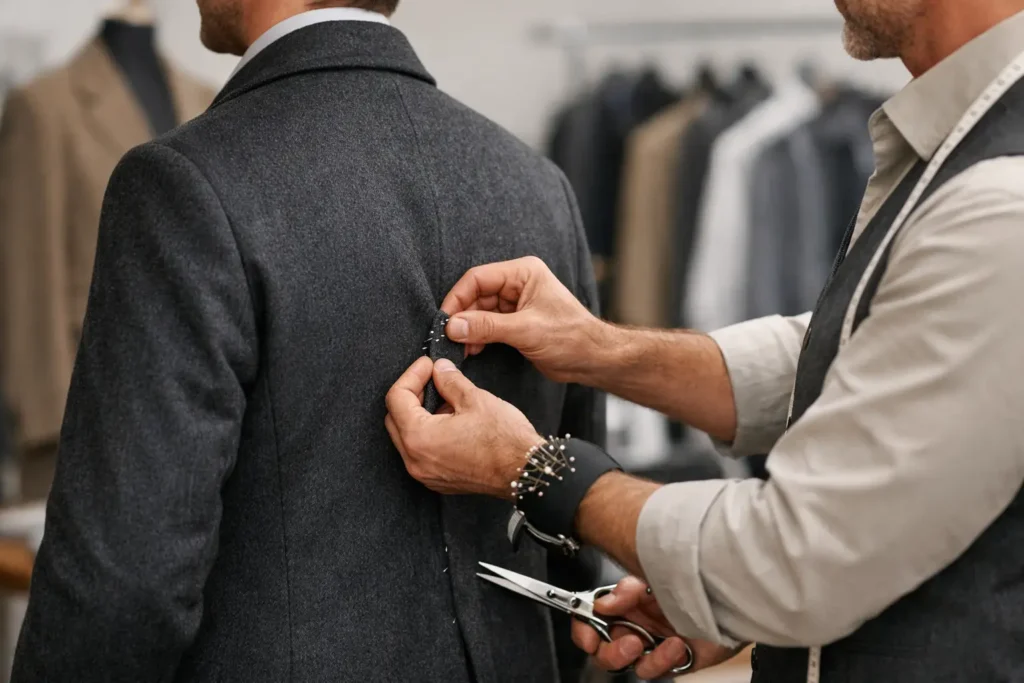
A good coat can last for years, but only if it fits properly. If the shoulders sit too wide, the sleeves cover your hands, or the shape feels bulky over your clothes, even an expensive coat can end up unworn. That is where a professional coat alteration service makes a real difference – not by changing the character of the garment, but by making it work better for your body, your routine, and the way you actually wear it.
For busy households and working professionals, the appeal is practical. You may have found a great wool coat in the sale, brought an older favourite back out of storage, or invested in a smart overcoat that needs a cleaner line through the body. In each case, alterations can be the difference between a coat you keep adjusting and one you reach for without thinking.
What a coat alteration service can actually do
Not every coat issue needs replacing, and not every issue can be fixed well. The value of a coat alteration service is in knowing the difference. Simple adjustments such as shortening sleeves, taking in the side seams, replacing the lining, moving buttons, or repairing a split seam are often straightforward when handled by an experienced tailor or alterations specialist.
Other changes are more technical. Shortening a coat from the hem can affect vents, pockets and balance. Narrowing shoulders is possible on some styles, but it is one of the more complex jobs and can quickly become uneconomical. Adjusting the collar roll, reshaping the chest, or changing how the coat sits across the back depends on construction, fabric weight and internal canvassing.
That is why a proper assessment matters. A well-run service should be clear about what is achievable, what will look natural once finished, and what is likely to cost more than the coat is worth.
The coat alteration service jobs people ask for most
The most common request is sleeve shortening. Ready-to-wear coats are often cut generously, and sleeves that are even slightly too long can make the whole garment feel oversized. This adjustment sounds simple, but it depends on how the cuff is made. Sleeves finished from the cuff are usually easier to alter than sleeves that need work from the shoulder.
Taking in the body is also common, especially with overcoats and formal coats that feel too boxy. A cleaner shape through the waist can make a coat look smarter without making it tight. The key is leaving enough room for layering. A winter coat that fits perfectly over a shirt may feel restrictive over a knit or blazer.
Length adjustments come next. Some customers want a shorter coat for easier movement when driving or commuting. Others want a long coat tidied rather than dramatically reduced. Small changes can work well. Large changes need more care because pockets, belt placement, vents and proportions all come into play.
Then there are functional repairs that overlap with alteration work. Loose linings, broken buttons, damaged seams, worn cuffs and zip issues can all affect how a coat sits and wears. Fixing those details often restores the coat more than people expect.
When alterations are worth the money
The short answer is that it depends on the coat. Quality matters. A well-made wool coat, tailored overcoat, trench or designer piece is usually worth considering for alterations because the fabric, structure and finish justify the cost of skilled work.
If the coat has sentimental value, the maths can shift as well. A family coat, a favourite piece that no longer fits quite right, or a special-occasion coat you cannot easily replace may be worth altering even if the cost is not the cheapest route.
On the other hand, very low-cost coats with poor lining, weak seam allowances or heavily fused construction may not respond well to extensive changes. You can still shorten sleeves or replace a button, but major reshaping may not deliver a result that looks polished. A trustworthy service will tell you that before any work starts.
Fit problems that should be checked in person
Some issues are easy to describe, but coats are structured garments. The real problem is not always where it first appears. Sleeves may look too long because the shoulders are too wide. Pulling across the back may come from the chest or armhole rather than the side seam. A collar that lifts away from the neck can point to a larger balance issue.
That is one reason in-person fitting is so useful. A specialist can pin the coat on the body, check how it falls when buttoned and unbuttoned, and ask what you wear underneath. This matters more with outerwear than with lighter garments because thickness changes the fit.
If you are using a local service, convenience should not come at the expense of accuracy. Collection and delivery are ideal for cleaning and standard garment care, but coats often benefit from at least one proper fitting if the alteration is more than a basic repair.
Fabric and style make a difference
A heavy wool overcoat behaves differently from a lightweight mac. A quilted coat, a padded parka, a trench with storm flaps, or a coat with a full lining all require different handling. The more detail a garment has, the more carefully the alteration has to be planned.
Leather trim, contrast stitching, topstitching, hidden construction and waterproof finishes can all affect what is practical. Even button placement matters. Move one element and you may need to rebalance another.
This is where specialist garment care helps. A coat should not only fit better after alteration – it should still look like the same coat. Matching thread, preserving shape, and pressing the garment correctly after the work are part of the finish, not extras.
What to ask before booking a coat alteration service
You do not need tailoring knowledge to ask the right questions. Start with whether the adjustment you want is recommended for that specific coat. Then ask how the work will be done, whether a fitting is needed, and whether the alteration could affect pockets, vents, lining or sleeve details.
Clear pricing matters too. Some coat alterations have a simple starting price, but complex outerwear usually needs a quote after inspection. That is normal. What you want to avoid is vague pricing with no explanation of what is included.
Turnaround time is another practical point. If you need the coat for work, a trip, or an event, ask before the coat goes in. A reliable local service should be upfront about lead times, and if a faster option is available, that should be stated clearly.
Cleaning before or after alterations
This is one of the most common questions, and the answer depends on the garment. In many cases, cleaning before alteration is sensible because stains, shrinkage and fabric condition can affect the final fit. A coat that has picked up dirt and moisture over a season may sit differently once properly cleaned and pressed.
Cleaning afterwards can also be useful if the alteration process leaves handling marks or if the coat needs a final refresh before wear. For more delicate or specialist items, it is best for the same service provider to advise on the right order so the garment is handled consistently from start to finish.
For customers using convenience-led local care, this joined-up approach is often what saves time. Instead of taking a coat to one place for cleaning and another for tailoring, the process is managed properly with fewer delays and less chance of mixed instructions. That practical service is part of why many customers choose Farnham Dry Cleaners for regular garment care and specialist items alike.
Signs you have found the right service
The best coat alteration service is not the one that says yes to every request. It is the one that gives a measured answer, explains any limitations, and aims for the best result rather than the biggest invoice. Good workmanship should feel almost invisible. The coat should hang better, move better and look more natural on you.
You should also expect clear communication. That means realistic timescales, straightforward pricing, and honest advice if a requested change is likely to spoil the coat or cost more than it should. Reliability matters as much as technical skill, especially if you are fitting alterations around work, school runs and everything else in the week.
A coat earns its place by being useful. When it fits properly, it looks sharper, feels more comfortable and gets worn more often. If you have one hanging in the wardrobe that is nearly right but not quite there, a professional alteration may be the simplest way to turn it back into a coat you rely on.