
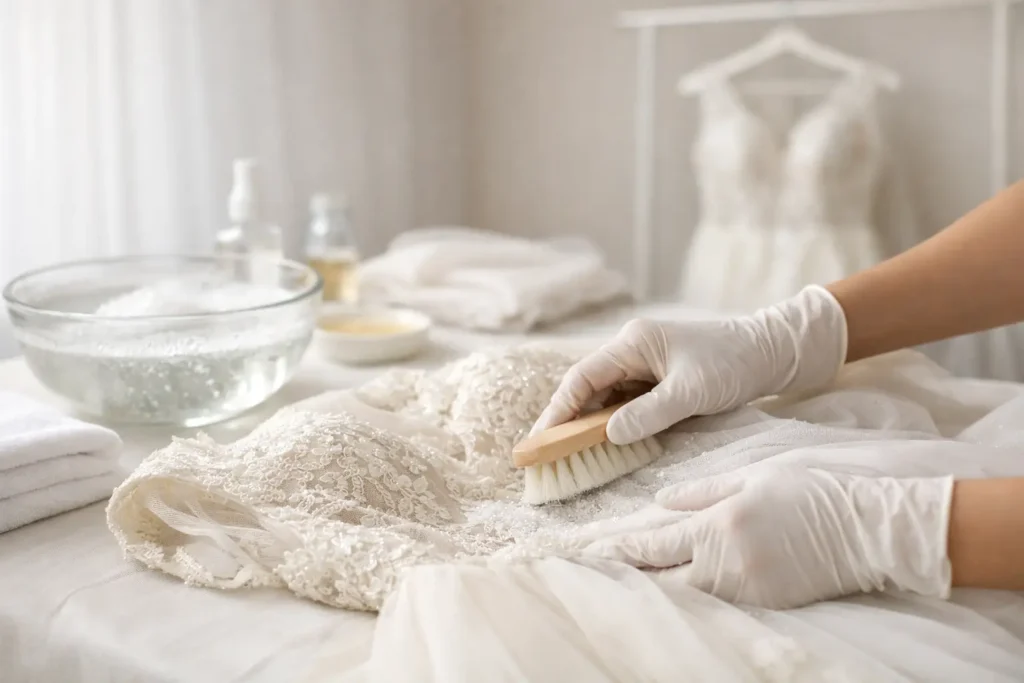
The morning after the wedding is when reality shows up on the hem. Grass marks, make-up, prosecco splashes and a fine line of dust around the train are all common. If you are wondering how to clean a wedding dress, the right answer depends on the fabric, the embellishments and how quickly you act.
A wedding dress is not like an everyday garment. It may combine lace, silk, tulle, boning, beading and stitched-in shaping, all in one piece. That means the safest cleaning method is rarely the quickest one, and trying to wash everything in one go can turn a small stain into a permanent problem.
How to clean a wedding dress without damaging it
Start by checking the care label, if there is one. Some dresses are labelled dry clean only, while others may have parts that can tolerate careful spot cleaning. If the label is missing, treat the gown as delicate by default.
Before doing anything else, lay the dress flat on a clean white sheet or towel in a well-lit room. Avoid hanging it for inspection if the fabric is heavy, as the weight can strain seams and distort the shape. Take a close look at the hem, underarms, neckline, bodice and train. These are the areas most likely to show marks.
It helps to separate stains into two groups. Surface dirt, such as dust or a light mud line on the hem, may be removable with careful local treatment. Set-in stains from red wine, fake tan, sweat or oily food are more complicated. The longer they sit, the more likely they are to oxidise and darken over time, even if they seem faint now.
The biggest mistake people make is reaching straight for water, stain remover or a home washing cycle. That can cause water rings, dye transfer, shrinkage or damage to trims. Beading, sequins and glued details are especially risky, because some adhesives soften or fail during wet cleaning.
What you can safely do at home
If the dress only has a very light mark and the fabric is stable, you can try cautious spot cleaning. Use clean white cloths only. Coloured towels can transfer dye, and textured cloths can snag lace or fine mesh.
Plain lukewarm water is often the safest starting point. Dampen, rather than soak, a cloth and gently blot the stained area. Do not rub. Rubbing pushes the stain deeper into the fibres and can rough up satin or silk. Work from the outside of the mark towards the centre so it does not spread.
For a slightly heavier dirt mark on the hem, a very dilute solution of mild detergent may help, but only on fabrics that are known to tolerate it. This is where caution matters. Polyester blends are generally more forgiving than silk, acetate or dresses with mixed trims. Test the solution first on a very hidden area, such as an inside seam allowance, and wait to see if there is any change in texture, sheen or colour.
Once the mark lifts, blot the area again with plain water to remove any residue. Then press gently with a dry white towel. Let the dress air dry flat, away from direct sunlight and radiators. Heat can yellow fabric, set stains and warp embellishments.
This sort of home care is best for minor, fresh marks only. If the stain is noticeable, the dress is valuable, or the material feels uncertain, it is wiser to stop early rather than experiment.
When not to clean a wedding dress yourself
There are times when home treatment is more likely to cause damage than fix the issue. Silk is one of them. It can watermark easily and lose its finish if cleaned incorrectly. Vintage dresses are another, because older fabrics and stitching are often fragile even if they look fine at first glance.
Heavily embellished gowns should also be treated professionally. Beads, pearls, crystals, embroidery and lace appliqué all respond differently to moisture and solvent. A cleaner needs to assess how those details are attached before choosing the right process.
The same applies if the dress has multiple stains of different types. Mud on the hem, deodorant marks under the arms and an oil-based food stain on the bodice may each need a different treatment. A one-size-fits-all approach usually leaves one of them behind.
If the dress is designer, sentimental or intended for storage, resale or future alteration, professional cleaning is the safer route. It reduces the risk of yellowing, tidemarks and hidden staining becoming visible months later.
Common stains and why they need different treatment
Not all stains behave the same way. Mud and dust are usually easier to manage than sugary drinks or body oils. A champagne splash may look harmless at first, but the sugar can oxidise and leave a brown mark later. Perspiration and perfume can do the same, especially around the neckline and underarms.
Make-up is often a mix of pigment and oil, which means water alone may not shift it. Fake tan can bind to fabric quickly and leave an orange tone that needs specialist treatment. Red wine is one of the most difficult, particularly on pale satin or silk. Then there is the hemline, which often collects a blend of soil, grass and street residue after a full day of wear.
This is why timing matters. The sooner the dress is assessed, the better the chances of complete stain removal. Waiting a few weeks might still be manageable. Waiting a year can make previously removable marks far more stubborn.
Professional wedding dress cleaning: what to expect
Professional cleaning begins with inspection, not solvents. A good cleaner looks at the fabric type, structure, embellishments, lining and visible staining before deciding how to proceed. Certain areas may be pre-treated by hand, while the full dress may be cleaned using a method suited to its construction.
Despite the name, dry cleaning is not always completely dry, and not every wedding dress is cleaned in exactly the same way. Some gowns respond best to specialist solvent cleaning, while others may need controlled wet cleaning. The correct method depends on the materials involved.
After cleaning, the dress should be checked again for any remaining marks, loose beading or areas that need finishing. Pressing also needs care. Too much heat can flatten texture, create shine on satin or distort delicate netting. Proper finishing is part of what gives the dress that fresh, balanced appearance again.
For busy households, convenience matters as much as fabric safety. That is why many people prefer a local specialist who can handle collection, cleaning and return without adding another errand to the week. Farnham Dry Cleaners provides expert wedding dress cleaning with the same practical focus people expect from a dependable local service.
How to store the dress after cleaning
Once the dress is clean, storage matters just as much as the cleaning itself. Plastic garment covers are not ideal for long-term use because they can trap moisture and encourage yellowing. Breathable materials are better.
If the dress is being stored for a long period, keep it in a cool, dry and dark place. Lofts and garages are poor choices because temperatures fluctuate too much. Avoid damp cupboards and anywhere near direct sunlight.
If the gown is heavy, hanging it long term can put stress on the straps, shoulders or bodice. In many cases, careful boxed storage with acid-free tissue is the better option. Tissue should support folds to reduce sharp creases, especially around embellished sections.
Even in storage, it is worth checking the dress occasionally. That does not mean frequent handling, just a sensible inspection now and then to catch any signs of yellowing, moisture or fabric stress before they become serious.
A sensible approach saves the dress
If you need to know how to clean a wedding dress, the simplest rule is this: treat small marks gently, and treat valuable fabrics seriously. Light spot cleaning has its place, but wedding dresses are made from materials that do not forgive guesswork. The right cleaning method protects the fabric, the fit and the memories attached to it.
A dress worn for one day often needs more care than a suit worn all year. Giving it proper attention soon after the event is the best way to keep it looking as special as it felt.