
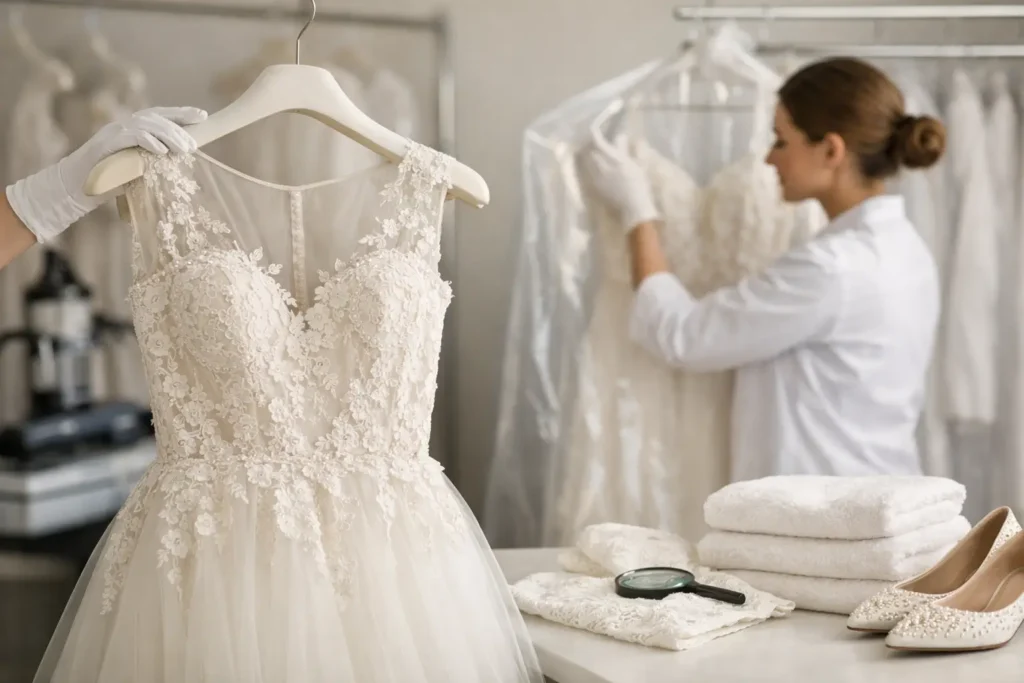
A wedding dress rarely looks dirty at first glance. Then you see the hemline, the make-up around the neckline, the splash from the dance floor, or the faint mark from a glass of fizz. A professional wedding dress cleaning service is designed for exactly this kind of garment – delicate, high value, emotional, and often more marked than expected once the day is over.
Unlike standard dry cleaning, cleaning a wedding dress needs a more careful approach. Fabrics can include silk, satin, lace, chiffon, tulle, organza and mixed linings, often with beads, sequins, embroidery, boning or structured layers. That means the right treatment depends on the dress itself, the type of staining, and how quickly it is assessed after the wedding.
What a wedding dress cleaning service actually covers
The main job is not simply to make the dress look clean again. It is to remove visible marks, deal with hidden staining where possible, protect delicate trims, and handle the gown in a way that respects both the fabric and the construction.
Most dresses arrive with more than one cleaning issue. The hem often carries ground-in dirt, particularly after outdoor photographs or a wet venue. Bodices can pick up perspiration, fragrance, fake tan and make-up. Sleeves and skirts may show drink splashes or food marks. Some stains are obvious on the day, while others – especially sugar, white wine and perspiration – can develop later and become harder to remove.
A proper service starts with inspection. This matters because two dresses that look similar can need completely different methods. One satin gown may respond well to solvent cleaning, while another with delicate trim may need careful spot treatment first. If the dress includes embellishment, hand finishing may also be needed.
Why specialist cleaning matters for bridal fabrics
Wedding dresses are not built like ordinary occasionwear. They are often layered, fitted, and finished with materials that react differently under cleaning. A general wash or home stain treatment can leave water marks, affect shape, weaken glue-set details, or distort fine netting.
Silk is one of the clearest examples. It can water-spot, lose finish, or change texture if treated incorrectly. Lace can snag or stretch. Beading may be stitched, glued or mixed, and each version behaves differently. Even where a care label exists, it does not always tell the full story of how the garment should be handled in practice.
That is why experience counts. A specialist cleaner is looking at the whole dress, not only the stain. They will consider the age of the mark, the stability of the dye, the trim, and the likely outcome before treatment starts. In some cases, stain reduction is realistic rather than total removal. Honest advice is part of a good service.
When to book a wedding dress cleaning service
Sooner is usually better. The longer stains sit in the fabric, the more chance they have to oxidise, darken or set. This is particularly true for invisible residues such as prosecco, deodorant, perspiration and sugary drinks, which may not show fully until weeks later.
That said, many brides do not sort the dress out straight away. After the wedding and any travel, it often gets folded back into a bag and left for a while. If that has happened, it is still worth having the dress assessed. Old staining can sometimes be improved significantly, even if it cannot be removed completely.
If you are planning to keep the dress, clean it before long-term storage. If you are planning to sell it, pass it on, or have it altered for another use, cleaning early makes the next step easier and helps preserve value.
Common stains and how they are handled
The bottom of the gown usually needs the most work. Mud, dust, grass and general ground soiling can work deep into the hem, especially with heavier fabrics and layered skirts. This often needs more than one stage of treatment.
Around the upper part of the dress, the most common issues are make-up, tan, perfume and perspiration. These can be awkward because they are close to delicate finishes and skin-contact areas. Protein-based and oil-based marks behave differently, so the treatment has to match the stain.
Food and drink stains are another mixed category. Red wine, gravy, icing, lipstick and candle wax all need different handling. There is no single cleaning method that suits every mark on every fabric. That is why fast stain removal sprays from a high street shop can do more harm than good on bridalwear.
What to do before handing the dress over
Try not to keep the dress in a sealed plastic cover for long periods, especially if it is damp at the hem or marked with food and drink residue. Plastic can trap moisture and odours. A breathable garment cover is usually better for short-term storage before cleaning.
Do not scrub marks or apply household stain remover. Even plain water can leave rings on some fabrics. If the dress has obvious damage such as a torn hem, loose beads or a broken zip, mention it at the point of booking so the cleaner can inspect those areas carefully.
It also helps to share what happened on the day if you know. A cleaner does not need the full wedding itinerary, but details such as grass stains, fake tan, red wine or candle wax can save time and improve the treatment plan.
Wedding dress cleaning service and preservation
Cleaning and preservation are related, but they are not the same thing. Cleaning focuses on removing soiling and stains. Preservation is about how the dress is protected afterwards so it stays in the best possible condition.
If you want to keep the dress as an heirloom or simply store it properly, ask how it will be packed after cleaning. Folding, acid-free tissue, breathable storage materials and a suitable box all matter. Poor storage can cause yellowing, creasing, mildew or transfer marks over time.
If you may wear the dress again for a vow renewal, family event or photo shoot, storage should also make future access easy. Sealing a dress away too tightly can be less practical than careful boxed storage with room for inspection.
Convenience matters more than most people expect
Wedding dress cleaning is a specialist service, but for most customers the bigger issue is time. After the wedding, people are back to work, sorting gifts, finishing travel plans and catching up on everything that got pushed aside. Taking a delicate gown across town and chasing updates is not high on the list.
That is where a local, responsive service makes a real difference. Collection and delivery remove a lot of the hassle, especially when the dress needs careful transport. Clear communication matters as well. People want to know what happens next, how long it is likely to take, and whether there are any concerns once the dress has been inspected.
For busy households across Surrey, the best service is usually the one that combines expert care with straightforward booking and reliable turnaround. That practical side should not be underestimated. A specialist garment still needs a simple, dependable process.
How to choose the right cleaner
Price matters, but it should not be the only factor. Wedding dresses vary too much for one flat expectation to make sense. A heavily embellished gown with multiple layers will not be handled in the same way as a simpler satin dress.
Instead, look for signs of proper garment knowledge and clear service standards. You want a cleaner who understands delicate fabrics, explains realistic outcomes, handles special items regularly, and makes the process easy from the start. Fast response time helps too, because customers often want to arrange collection while the wedding is still fresh in mind.
It is also worth checking whether the business handles specialist garments as part of its normal service, rather than treating bridalwear as an occasional extra. Businesses built around fabric care, collection and delivery, and responsive local service are often better set up for this kind of work. Farnham Dry Cleaners is one example of that approach, combining convenience with specialist treatment for high-value garments.
What results should you expect?
Most dresses improve dramatically after professional cleaning, but the exact result depends on fabric, stain type and timing. Fresh dirt on a polyester hem may come away well. Old oxidised stains on silk may lighten without disappearing completely. Beaded areas may need gentler treatment to protect detail, even if that means a slower process.
A trustworthy cleaner will not promise impossible results. What they should offer is proper assessment, careful handling and the best treatment suitable for the dress. For many customers, that balance matters more than bold claims.
If your dress has been sitting in a wardrobe since the wedding, it is still worth doing something with it. Cleaning now is usually better than waiting for stains to deepen or fibres to age further. And if the gown is freshly worn, acting quickly gives you the best chance of a stronger result with less risk to the fabric.
A wedding dress is not just another item in the wardrobe, but it does not need a complicated process either. With the right cleaner, the next step should feel simple – expert care, clear advice, and one less thing for you to worry about after a busy day.